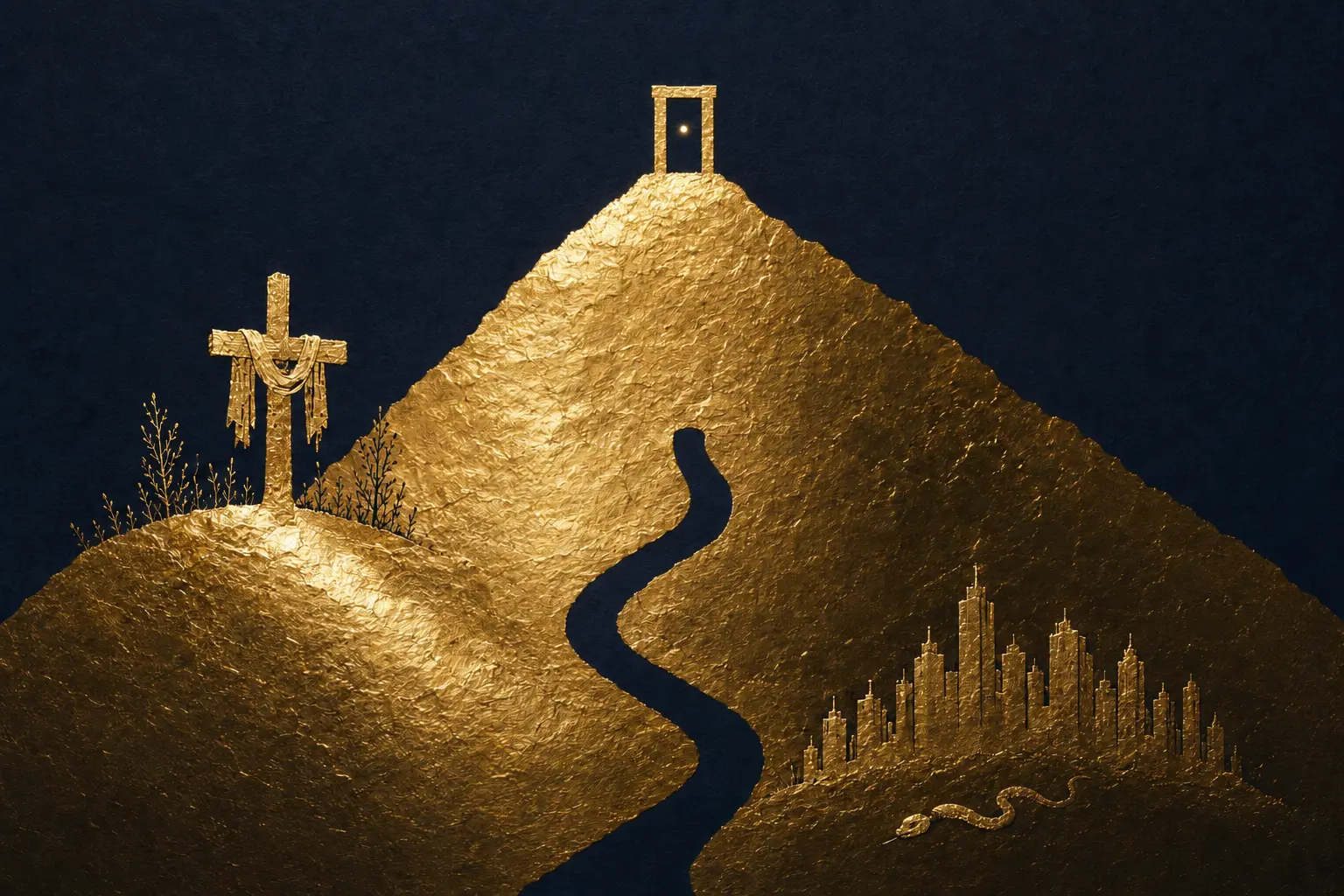
There are two ways the present is usually expected to end. The honest third way is the one nobody wants.
The first is collapse. The system is rotten, the rot is terminal, and at some point the whole arrangement comes down — and an ending, whatever else it costs, would at least mean something. The second is transfiguration. The pressure is building toward a threshold, and on the far side of it something genuinely new: a settlement, an awakening, a civilisation that has finally learned. Both are endings. Both hand out meaning by arriving somewhere.
The third way arrives nowhere. The system neither falls nor transforms. It grinds on, degraded, indefinitely — coherent enough to keep working, exhausted enough that no one inside it can say what it is for. This is the shape the evidence actually points to, and it’s the hardest to hold, because it withholds the meaning that collapse and transfiguration both promise.
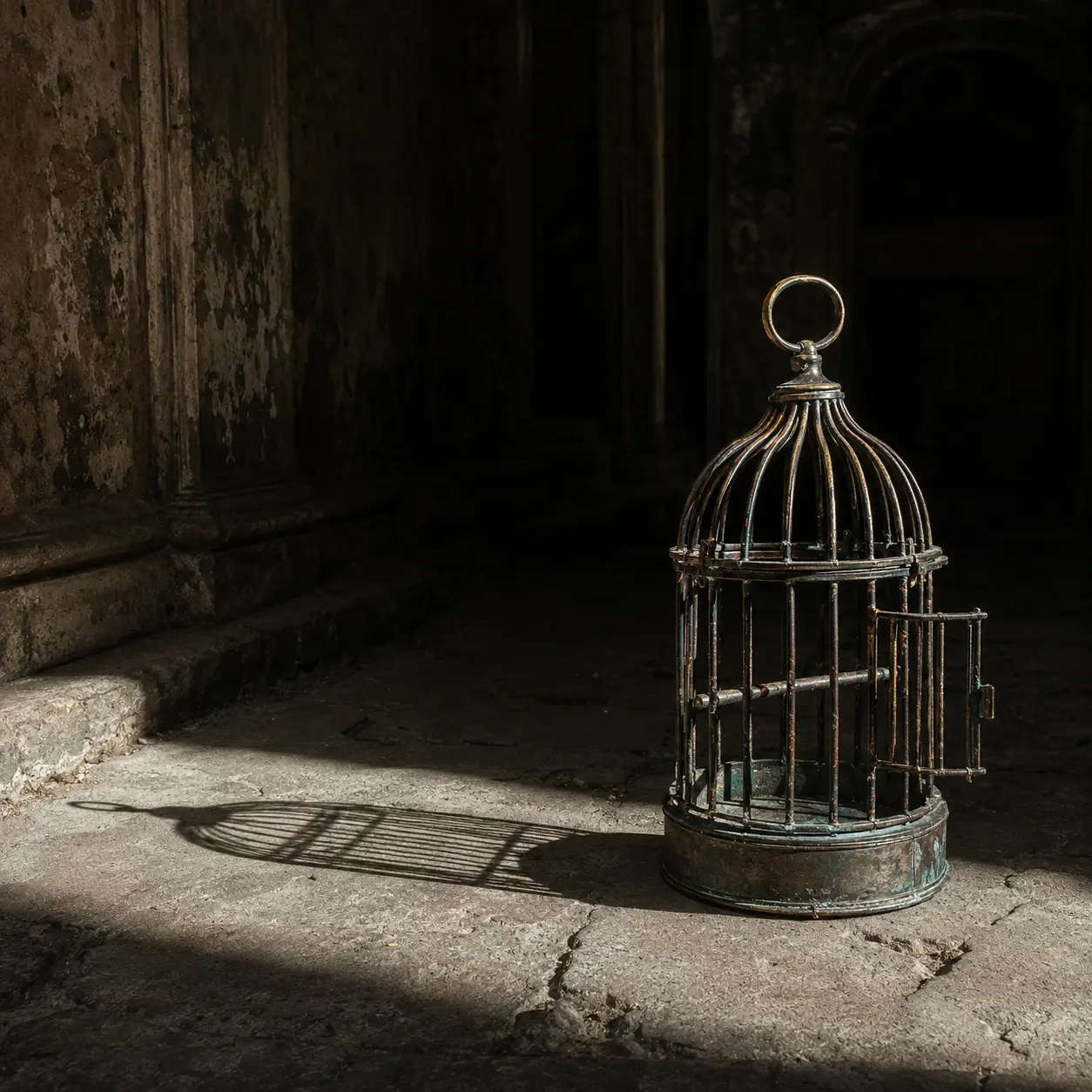
The clearest case is the one the last forty years were supposed to settle. China was meant to do one of two things: fall, as the Soviet system fell, or open up, grow rich and grow free, and arrive at the same destination as everyone else. It did neither. It grew rich and stayed unfree, building out of that contradiction a machinery of surveillance and control durable enough to keep working without ever resolving into anything a theory can name. Not collapse and not conversion: an incoherent arrangement held together by force while every coherent alternative around it ran out or was snuffed out. The durability is real, but it’s the durability of a cage. That it works isn’t a point in its favour. It is the thing this age keeps mistaking for legitimacy.
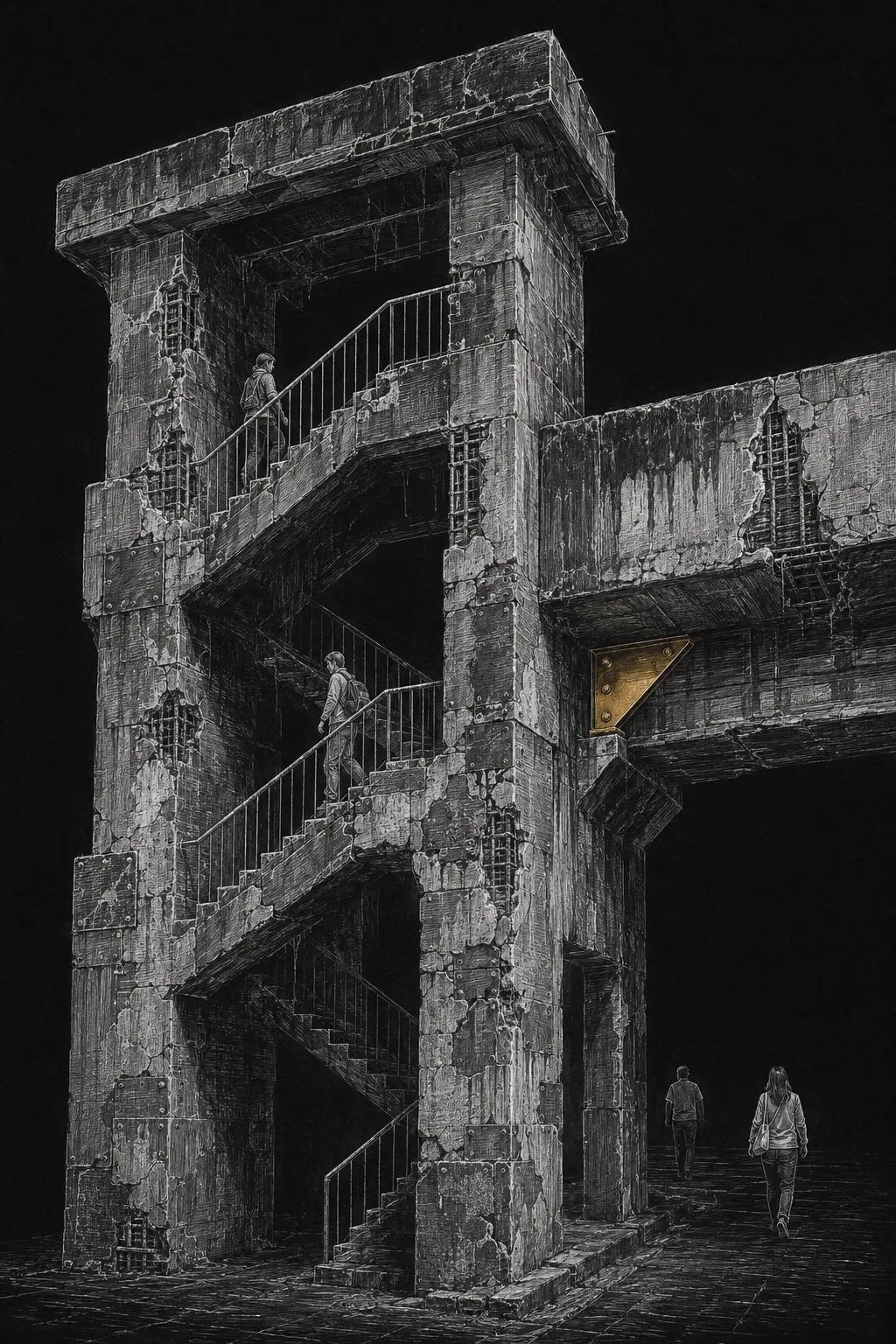
There is an image for what this does to the people living inside it. They can see they are surrounded by lies. What they cannot see is the truth that would replace them. So rather than tear the false structure down and stand exposed, they leave it standing for the shelter, since a known falsehood at least keeps the weather off, and do not notice that the roof now blocks out the sun.
The comfort, when a system feels this managed, is to look for who is managing it. A steering cabal would at least mean someone is at the wheel; a malign order is still an order, and an order can be opposed, exposed, brought down. The harder, truer claim is that the secret meetings are real and there is still no one driving. The coordination among the people with the most to coordinate is genuinely opaque; whether that opacity hides a hand or only hides more drift cannot be settled from outside, and should not be forced either way. But the wish for it to be a hand is the sign. It’s the same wish as the wish for collapse: that the situation has an author — because an authored situation means something, even if what it means is hostile.
One thing genuinely has changed, and it should be granted in full. Transmission has sped up. What once took a century to spread through a population now moves through it in a decade, and the rate is real and measurable. But the rate of transmission is not the rate of formation. Wisdom, justice, the slow making of a person fit to be trusted — these move as slowly as they ever did. What makes the present feel like vertigo is that gap — the surface speeding up while the depth doesn’t move at all. Mistaking the first for the second is how a society talks itself into believing that because its information moves faster, it must understand more. It has not. Becoming wise still takes as long as it ever did, and the conditions to spend that time are gone.
The instinct here is to exempt the institutions you trust from the diagnosis. The diagnosis does not allow it. The Catholic Church is remembered, by those inside it, as the one structure that would not bend to the totalitarian regimes of the twentieth century. The record is more mixed than the memory. There was real resistance, and there were also the accommodations: a concordat signed with Nazi Germany in 1933, terms reached with Mussolini before that, a long habit of treating with whatever power held the ground in order to keep the doors open.
In 2018 the same habit produced a quiet deal with Beijing over the appointment of bishops, the terms largely unpublished, the reasoning unchanged — keep the sacraments reaching the people inside, whatever it costs at the table. The reasoning is intelligible, perhaps even right. But it is the same reasoning the Church names as failure everywhere else: moral capital spent now against a future that has to be assumed rather than secured, the bill entered in a ledger no one can fully read.
Underneath all of it is a kind of accounting. Every system, East and West, market and party, runs on something it consumes and cannot produce: trust, restraint, the willingness to keep a promise that has stopped being convenient, the gift given with no contract to guarantee its return. Pope Benedict XVI put this at the centre of an encyclical that most of its readers filed under social teaching and moved past: the gift, the freely-given, the thing no exchange produces and every exchange depends on. Scale it up from the economy to the whole age and the picture is an overdraft. The earthly city is spending a moral substance it has no way of replenishing, in every quarter at once, and the grinding-on is the sound of the account being drawn down rather than refilled.
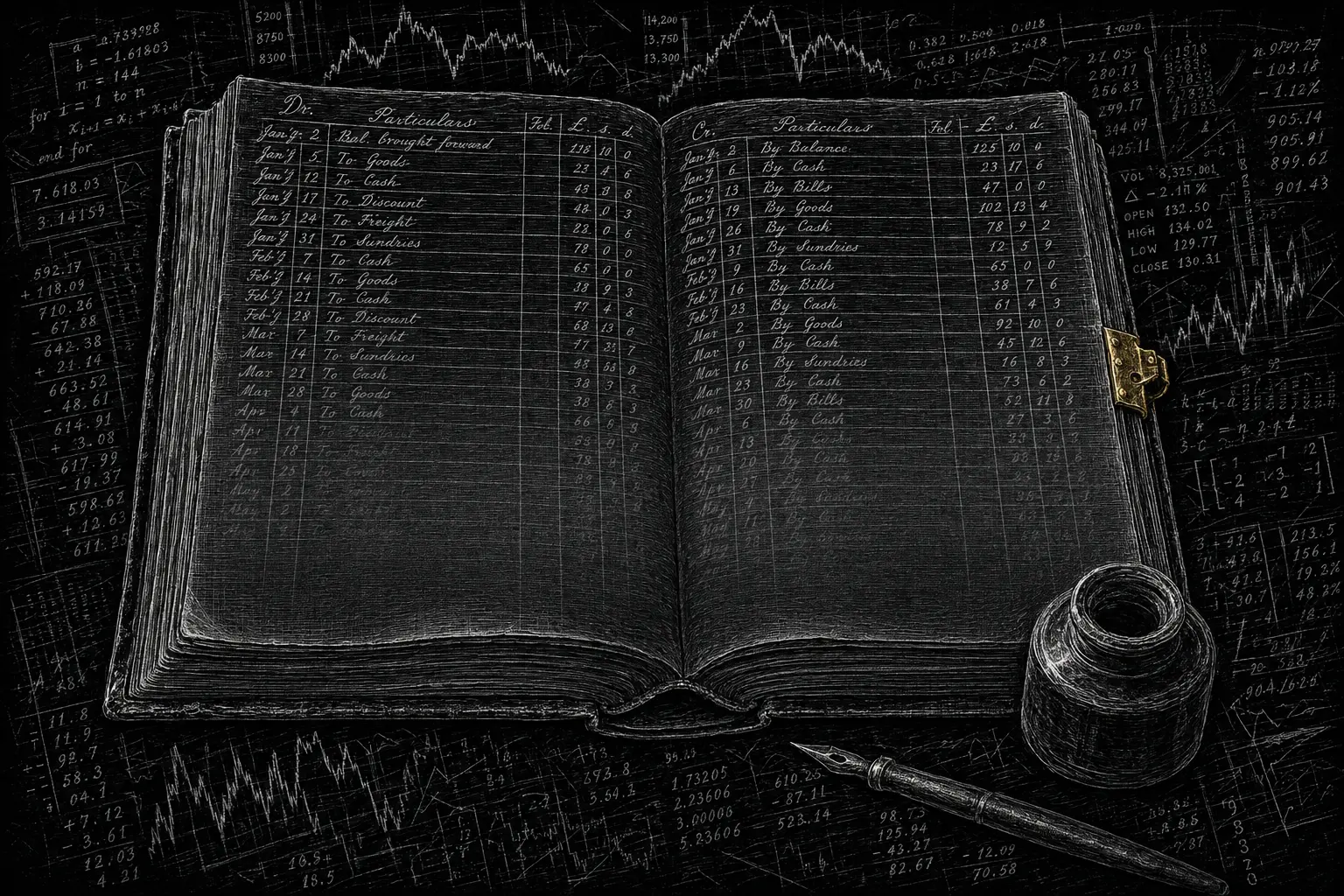
This is an old formula stated as a balance sheet. Grace perfects nature; nature does not perfect itself. The city built by human hands cannot raise itself into the city of God from the inside. It can only be completed by something it cannot generate. The exhaustion, read correctly, is not the failure of the project. It is the project running honestly to the end of what it had, and finding that what it had was never enough to finish on.
This is where anyone doing the diagnosis has to watch his own hands. The moment the earthly city is seen to offer no resting place, a hope rises to fill the vacancy, and it arrives in a particular disguise, the same one every time. It wants the good thing guaranteed. It wants the turn toward love, toward Zion (the city that holds), toward whatever completes what history cannot complete — and it wants the very exhaustion that proved the process insufficient to be the thing that now delivers it.
The disguise has many faces and one shape. It is the preference for collapse over grinding-on, because a clean ending implies a meaning. It is the preference for the hidden hand over the authorless drift, because an enemy at the wheel is still someone at the wheel. It is the reach for whichever frame confirms the phase you already feel yourself to be in, chosen because it flatters the mood when the wanting itself was the thing to examine.
Its most refined form is the most beautiful one: that Christ is being drawn up out of matter by a kind of cosmic current, the failure of everything else forcing him into being. That was Teilhard’s vision (the Jesuit who read evolution as a long climb toward a final point of union he called Omega), and read this way it turns gift into machinery. The vision is serious, and not to be dismissed; the Church flagged the danger in it long ago, and the danger is exactly here. A union the cosmos is obliged to produce is not grace. It is historical inevitability under another name.
The single thing under all of them is the wish for inevitability — for the good to be secured by the machinery rather than turned toward against its grain. And it never is. A love that history delivers on schedule is not love. A Zion the age produces as its next stage is not Zion. The thing that would make the arrival worth anything is exactly the thing inevitability removes: that it was chosen, by people who could have refused.
There is a sentence usually read as an answer to all this, which is in fact a refusal of the question. My citizenship is not of this world. It does not tell you which way the earthly city goes. It tells you the earthly city was never the thing your weight was meant to rest on. The grinding-on and Zion answer two different questions, forced into competition only because the first was asked as though everything depended on it. The earthly city offering no rest is not a flaw in the reading. It is the reading coming out right. It was only ever describing the thing that is not home.
So the whole weight comes to rest on a word history will never say on our behalf. The seed of the same Love is in every tradition and in every person — named differently, tended differently, but present — waiting on a turn that is possible in every age and guaranteed by none. Whether the turn is made is left genuinely open, and the openness is not a defect in the design. It is the dignity of it. The image of God in a person is the part of him that can refuse — and a creature that could not refuse could not consent either, which would make his yes worth nothing. The uncertainty everyone wants resolved is the same uncertainty that makes the resolution worth wanting.
Build on the if, then. Leave the inevitability where it fell.