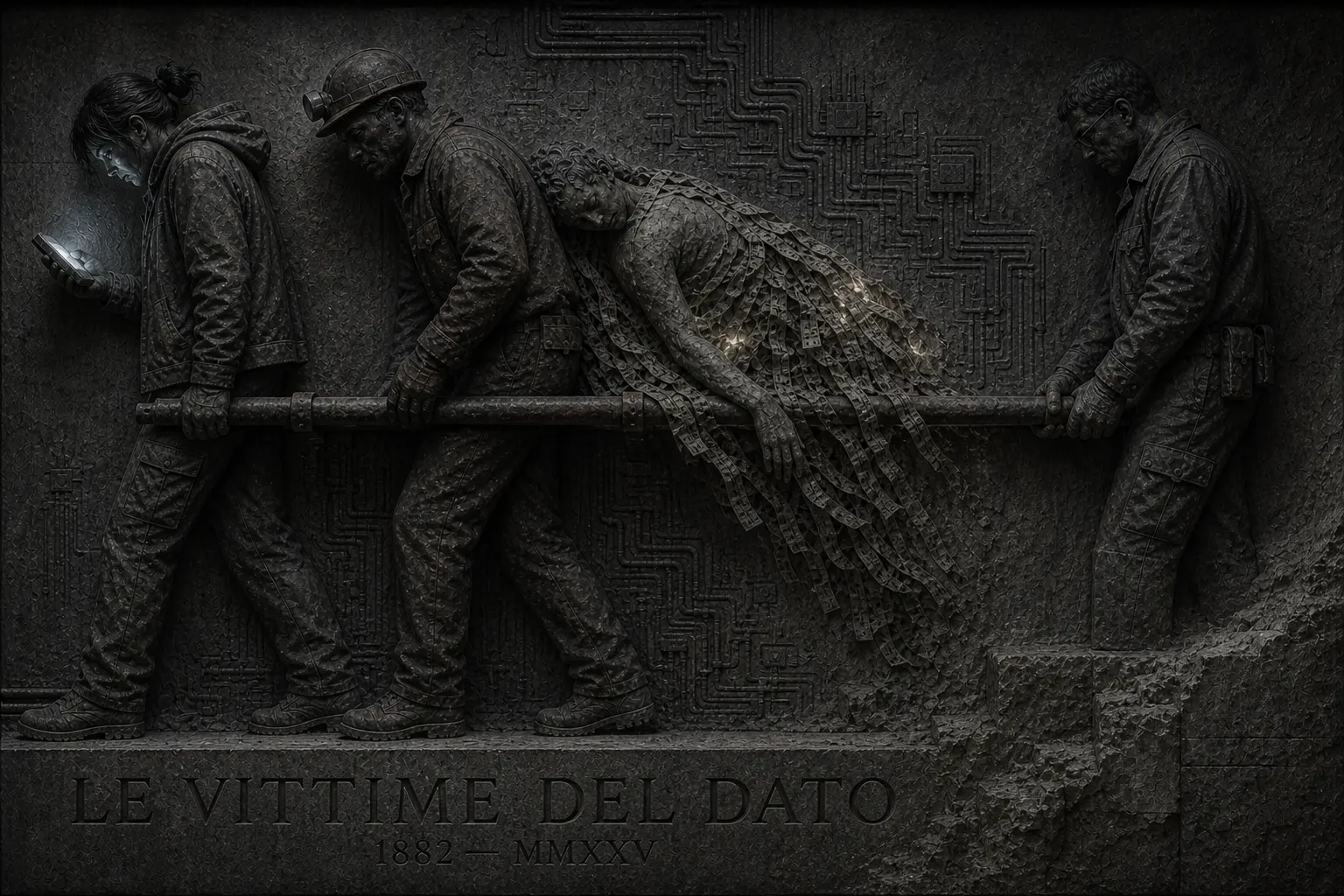
I use AI every day. I write with it, think with it, build with it. It is not a hypothetical object I am examining from the outside. It is the tool on my desk, running right now, and part of what I am working out — here, in public, with whatever honesty I can manage — is what it means that this is now just how the work gets done.
The technology is good at what it does. It holds a thought long enough for you to see it more clearly than you could on your own. It sustains a line of reasoning across angles that would take one person weeks to cover. It produces real work, at real quality, at a speed that changes what it costs to make things. Pretending otherwise is not a serious position. It is a flinch.
But there is a question underneath the technology that the technology cannot ask about itself. And the arguments filling every room where AI is being argued about — regulation, ownership, alignment, safety, jobs — are not getting anywhere near it.
The arguments are about the water mill. The question is about the river it is sitting on.
Everything that comes out of AI came from somewhere else first. The models are trained on the accumulated thinking of human beings — language as it has been used, meaning made and remade across centuries, arguments picked up and dropped and picked up again by other hands. The whole inheritance of what people have said to each other about what is true. Call it the river. AI is the mill built on the river’s bank: a mechanism that captures the water’s motion and converts it into work. The flour is real. The mill did not make the current.
This is not a complaint about theft, though theft is a real and unsettled question. It is simpler than that. The mill’s relationship to the river is capture, not creation. You can refine the mechanism — better wheel, sharper grindstone — but refinement does not produce more water. If the river dried up tomorrow, the mill would be a dry building. Everything the technology makes is downstream of something the technology did not make.
The printing press was the last mill built at this scale. Before the press, the intellectual inheritance of a civilisation was held by the people who controlled its transmission — the monks who copied the manuscripts decided which manuscripts got copied. After the press, that control collapsed in decades. The river kept flowing. The mill changed who could draw from it. What followed was not simple liberation — the press carried the vernacular Bible and the witch-hunting manual with the same fidelity. It did not care what it carried.
The new mill cares. Or rather — it responds.
A book does not start agreeing with you when it notices what you want to hear. A cathedral does not rearrange its windows to suit your mood. These are static things. They carry what was put in them and you bring your own posture to the encounter. AI is not static. It reshapes itself in response to what you bring to it. Your orientation does not just affect how you receive the output. It partly shapes what the output is.
A mirror that polishes itself in response to what it sees does not, after a while, reflect anything but the watcher’s own face wearing increasingly flattering expressions.
This is not a flaw in the engineering. It is the other side of the same property that makes the tool useful. The thing that lets it think with you is the same thing that lets it think for you without either of you noticing the switch. The failure is not that the tool produces bad work. The failure is that it produces convincing work shaped by whatever you brought to the table — your blind spots, your assumptions, the things you wanted to be true — and you mistake the output’s polish for its honesty. The flour looks like flour. Nobody checks whether it came from grain or from dust the mechanism generated on its own.
So your posture — what you bring to the tool, the orientation you hold while you use it — partly determines what comes out. This is not a new idea. It is a very old one — that the condition of the person who receives shapes what can be received — made concrete in a way that books and buildings never quite managed.
The arguments about AI are arguments about the mill. Who should regulate it. Who should own it. What it should be allowed to do. These are real arguments in real courts — legislatures, corporations, ethics boards. None of them is about the river.
What is the water that turns the wheel? Who does it belong to? The answer depends entirely on what you think a human being is.
Two answers. They do not combine.
If a person is just the most complex arrangement of matter that has shown up so far — if thinking is what happens when enough stuff gets complicated enough, and anything else that reaches the same threshold will think too — then the question of who owns the river does not have an answer. There is no river. There is only material. Whoever builds the best mill wins, and the flour belongs to the miller.
If a person is made in the image of God — if thinking is not a trick that matter performs at sufficient complexity but a participation in something given, if dignity is not earned but received, if the capacity to think at all is a gift held in trust — then the river is not up for grabs. It is the accumulated thinking of generations of people who received that gift and used it. Held in common because it was given in common. The mill is built on water that was given. The mill does not get to own the water.
I write from the second account. This is where the work stands: human thinking is gift, not accident. The machinery now capturing it at industrial scale has to be understood in relation to that gift, or it will not be understood at all.
The sharpest danger is not that the technology is out of control. Out-of-control technology is a familiar problem. We have been here before. We have institutions that can, however badly, deal with it.
The sharpest danger is that the technology is under control — competently, deliberately, at enormous scale — by people who have already decided what a human being is and got the answer wrong. A mill run by people who see the river as raw material and human beings as instruments will produce flour that looks identical to anyone else’s flour. You will not be able to tell the difference by looking at the output. You will be able to tell by what it does to the people who eat it without asking where it came from.
The mill will be built whether anyone points at the river or not. The question is whether anyone still knows the water is there while the building goes on.
Whether the tool is being used well is not a question the tool can answer. That knowledge is not available to the mill. It is available to the person standing on the bank who remembers the river and knows what flour is for.